09 fevereiro, 2012

Dia Aberto


A Universidade Lusófona promove hoje e amanhã o evento anual de Dia Aberto, em que os alunos das escolas secundárias visitam os diferentes Departamentos da Universidade para conhecer melhor a instituição e curso que eles queiram escolher para a sua formação superior.
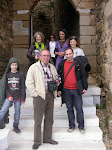
O Departamento de História recebeu hoje sete alunos da escola secundária Dr. Ginestal Machado (Santarém).
O director do curso, Prof. Doutor Teotónio R. de Souza fez a apresentação do Departamento. Participaram na apresentação os responsáveis e representantes do Núcleo Lusófono da História. Os potenciais candidatos participaram num concurso de conhecimentos da História e os melhores respondentes serão premiados. Os jovens tiveram oportunidade também de trocar as suas ideias acerca de História.

07 fevereiro, 2012

O Futuro do Ocidente

The Indian Council of Historical Research (ICHR) has published Networks in the First Global Age,1400-1800 [ New Delhi: Primus Books, 2011, pp. 380], an addition to its Monograph Series. Edited by Rila Mukherjee, it contains essays by an international group of historians. Two essays cover Goa, and that makes the book particularly relevant for this column. But more important are the conclusions predicting the end of the West engineered modernity and politics of global domination.
The title of the book points to the need of changing the paradigm, namely to First Global Age, as different from «early modern» which is presently the dominant eurocentric view of history in terms of the evolution of European modernity and capitalism binding the globe.
The introductory chapter by the editor and Chapter One by J.B. Owens delve into this discussion paying respect to Andre Gunder Frank and his farewell book ReOrient. It is a welcome homage to the great scholar. I too had the privilege of corresponding with Andre Gunder Frank before he died. My article online at http://hdl.handle.net/10437/220 explains the rest.
The western eurocentric perspective is shown here as unable to do justice to transregional trade networks that preceded, accompanied and followed the European polity of nation-state and its concept of mercantilism. DynCoopNet is an acronym used by the research group created by J. B. Owens. This book is mainly a product of this group, but it includes some additional researchers who favoured the alternative way of interpreting the dynamics of the non-European networks of trade across times.
The resillience of these networks vis-a-vis the western world system on the verge of colapse justifies the need of reviewing the prevailing Eurocentric paradigm that defined modernity exclusively in terms of the Rise of the West. All the three main components of the western modernity, namely centralized nation, state and economy are presently tottering.
What I may here call the Third Global Age, admitting that the European imperialism that preceeded the present era of digital revolution was the Second Global Age, is taking us back to the reality that the European Discoveries and violent progress sought to hide during the past five centuries, and which Andre Gunder Frank dared to expose as ephemeral success of the West.
Central to the western construction of modernity were the concepts of certainity and security. The West is now learning painfully to live the reality to which it had “condemned” the non-European regions and their peoples. I tis a reality represented by non-linear, random, and sometimes short-lived networks.
The non-Europeans have always been familiar with and live comfortably in these small world and flexible networks, but complex social spaces. It is too slippery a reality for the west-trained historians and social scientists to interpret with their notions of stable system and structures. The Western scientific pet desideratum of predictability is visibly at risk. This risk grows when intolerance to values of other people prevails. The Western value system as shaped by the illuminists and backed by early racist and more recent pseudo-democratic political liberals, will find it hard to adjust to the values that determined and nurtured the dynamics of the networks of exchange among the Asian and other non-European peoples.
It will be a painful face-saving exercise for the dominant world powers of the past in this growingly cyber-controlled system that exposes its political chicaneries. The book only stops short of predicting that the drone-controlled responses of the West may delay the full spring of the Third Global Age, but may not suffice to prevent a glacial era that may condemn the West to periphery of the old system of non-Erupean collaborative networks.

20 dezembro, 2011

V SEMINÁRIO IBÉRICO DE HERÁLDICA E CIÊNCIAS DA HISTÓRIA

Realizou-se no passado sábado, dia 3 deDezembro, no Auditório Armando Guebuza, no Campus Universitário da Universidade Lusófona, do Campo Grande, em Lisboa, o V Seminário Ibérico de Heráldica e Ciências daHistória, subordinado ao tema geral “Património Heráldico eFalerístico dos Estados Iberoamericanos no Bicentenário das Independências”.


Numa co-organização das Secções de História do Património e da Ciência e de Genealogia, Heráldica e Falerística da Linha de Investigação História, Memória eSociedade do CPES – Centro de Pesquisa e Estudos Sociais; do Departamento de História, da Faculdade de Ciências Sociais e Humanas; do Semináriode Genealogia e Heráldica da Universidade Lusófona de Humanidades eTecnologias; e, da Academia Internacional de Heráldica (Delegação de Portugal),esta jornada científica constituiu um grande êxito de intercâmbio deconhecimentos e saberes, a par da abertura de novas perspectivas derelacionamento entre investigadores espanhóis e portugueses nesta área das ciências da História.


Nesta V Edição do Seminário Ibérico,acolhida uma vez mais pela ULHT, foi muito grato receber uma dezena deInvestigadores espanhóis que representavam a Universidade de Sevilha, aUniversidade de Huelva e várias Academias e Instituições Culturais do nossopaís vizinho e irmão.


Para lá do almoço e do jantar-tertúlia,onde se prolongaram os laços de convívio ibérico, a sessão de trabalhos contoucom a apresentação das programadas comunicações dos Investigadores Fernando deArtacho, José Colaço, Alberto Germán, Vítor Escudero, Segismundo Pinto e AnaCristina Martins e, ainda, com a comunicação extra programa de Francisco de Mendia Vassalo.


No final dos trabalhos foram emitidos eentregues Certificados de Presençaaos mais de cinquenta participantes que, com grande interesse e valiosas intervenções, estiveram presentes em todos os trabalhos e foi, ainda, anunciadoo II Troféu Ibérico de Heráldicaque este ano premiou e distinguiu a Obra, a Trajectória e os Méritos do ProfessorArquitecto Segismundo Ramires Pinto, Presidente da Academia Portuguesa deEx-Líbris e Presidente da Academia Lusitana de Heráldica.


A Coordenação Científica dos Trabalhosesteve a cargo da Professora Doutora Ana Cristina Martins e do InvestigadorVítor Escudero, ambos dos CPES e teve a Presidência da Cerimónia de Abertura eEncerramento dos Trabalhos a cargo do Professor Doutor Teotónio R. de Souza,Director do Departamento de História da FCSH da ULHT.


O próximo Seminário Ibérico de Heráldica e Ciências da História, na sua VI Edição, será organizado em Sevilha, Espanha,durante o próximo ano de 2012.